
Dental Care After 50: Common Oral Health Problems and How to Prevent Them
Updated: Jul 28
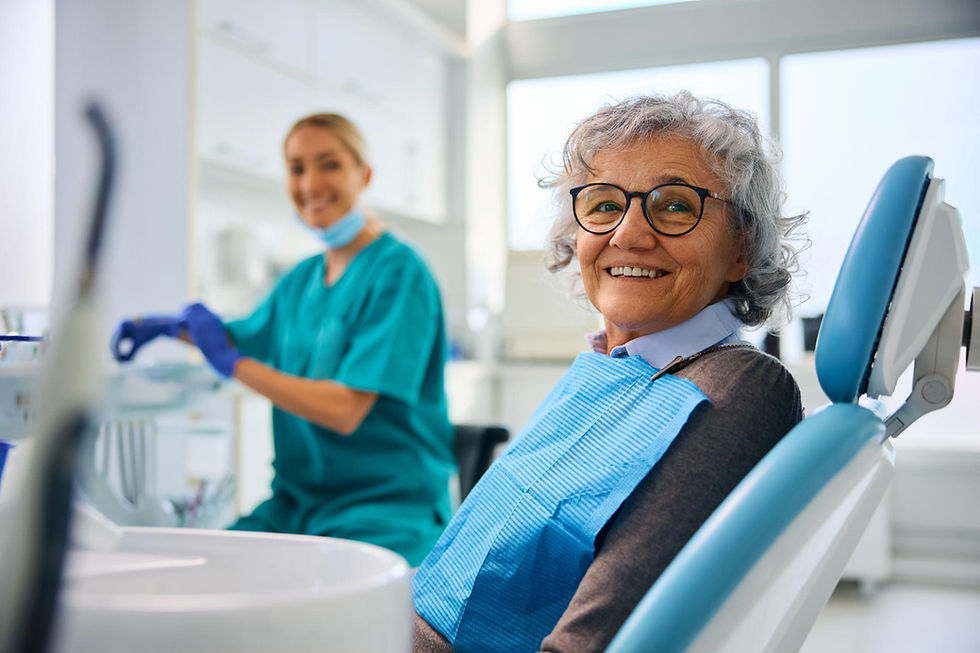
Dental care after 50 focuses on protecting your natural teeth, gums, and existing dental restorations from age-related changes such as dry mouth, root decay, gum disease, and enamel wear.
Maintaining good oral health as you age requires consistent home hygiene, a balanced diet, proper management of dry mouth, and regular dental visits. With preventive care and early treatment, your natural teeth can remain healthy and functional for years to come.
Understanding Dental Care After 50
Dental care after 50 can be different from dental care during earlier adulthood. Over time, natural wear on tooth enamel, prescription medications, health conditions, and changes in gum tissue can influence your oral health.
Enamel gradually becomes thinner, nerves inside the teeth may become less sensitive, and gums can begin to recede.
Specialized senior dental care focuses on early detection and conservative treatment. Addressing small changes promptly can help protect your natural teeth and reduce the likelihood of requiring more complex dental procedures later.
Common Signs and Symptoms of Aging Teeth
Recognizing early warning signs can help you address dental problems before they cause significant discomfort or damage.
Tooth Sensitivity: Increased sensitivity to hot, cold, or sweet foods can indicate worn enamel or exposed tooth roots.
Persistent Dryness: A sticky or dry feeling in your mouth can make chewing and swallowing uncomfortable.
Bleeding or Swollen Gums: Bleeding while brushing can be an early indication of gum inflammation.
Receding Gums: Teeth that appear longer than they used to may indicate that the gum tissue is pulling away.
Bad Breath: Persistent bad breath or an unpleasant taste can sometimes result from bacteria accumulating around or beneath the gumline.
Key Causes and Risk Factors
Several factors can influence your oral health after age 50.
Factor | Primary Cause | Impact on Oral Health |
Prescription Medications | Antihypertensives, antidepressants, antihistamines | Can reduce saliva flow and contribute to dry mouth |
Systemic Health Conditions | Diabetes, heart disease, arthritis | Can increase inflammation and make home hygiene more difficult |
Enamel Wear | Decades of chewing and acid exposure | Weakens the outer tooth surface and increases decay risk |
Hormonal Changes | Natural aging processes | Can affect jawbone density and gum tissue resilience |
Common Oral Health Problems After 50
1. Dry Mouth (Xerostomia)
Saliva is one of your mouth's natural defense mechanisms. It helps wash away food debris, neutralize acids, and protect against bacteria.
Many commonly used medications can reduce saliva production, creating an environment where tooth decay can develop more easily.
2. Root Caries (Cavities on Tooth Roots)
As gums recede with age, portions of the tooth root may become exposed.
Unlike the visible crown of a tooth, the root surface doesn't have the same hard enamel protection, making exposed roots more vulnerable to decay.
3. Periodontal (Gum) Disease
Advanced gum disease is a major cause of tooth loss in mature adults.
Regular dental examinations and professional periodontal care can help detect gum disease early and reduce the risk of further damage to the gums and supporting bone.
4. Myth vs. Fact in Senior Dental Care
Myth: Losing your teeth is a natural part of getting older.
Fact: With consistent oral hygiene and regular dental checkups after 50, natural teeth can potentially last a lifetime.
Myth: Dry mouth is only an inconvenience and doesn't affect your teeth.
Fact: Saliva plays an important role in protecting against tooth decay, so persistent dry mouth can increase your risk of dental problems.
Prevention Tips for Healthy Aging Teeth
Maintaining healthy teeth after 50 requires simple daily habits combined with professional dental care:
Brush twice daily with fluoride toothpaste: Use a soft-bristled manual or electric toothbrush to clean thoroughly without irritating delicate gum tissue.
Clean between your teeth daily: Use dental floss, interdental brushes, or a water flosser to remove plaque from areas your toothbrush can't reach.
Hydrate and manage dry mouth: Drink water regularly and consider appropriate products designed to help relieve dry mouth.
Prioritize regular dental checkups: Routine examinations and professional cleanings can identify problems at an earlier stage.
Eat a balanced diet: Limit sugary and acidic foods while including nutrient-rich foods that support healthy teeth and bones.
Treatment Options for Senior Dental Care
When dental problems occur, modern restorative treatments can help restore function and appearance.
Dental Crowns and Fillings: Repair damaged or decayed teeth while preserving as much natural tooth structure as possible.
Periodontal Therapy: Treatments such as scaling and root planing remove bacteria and buildup beneath the gumline to manage gum disease.
Dental Implants: Replace missing teeth with stable restorations supported by implants placed in the jawbone.
Custom Dentures or Bridges: Replace missing teeth to help restore chewing ability, appearance, and facial support.
When to See a Dentist in Cumming, GA
You don't need to wait until you're experiencing severe pain to schedule a dental appointment.
Contact your dentist if you notice:
Loose teeth or changes in your bite
Sores, spots, or bleeding areas that don't heal within two weeks
Difficulty chewing, swallowing, or speaking comfortably
Persistent jaw pain
Swelling around your gums
At Bethelview Family Dentistry, we provide compassionate, personalized dental care for mature patients in Cumming, Georgia, and surrounding communities, including Alpharetta and Suwanee.
Conclusion
Taking care of your oral health after 50 helps protect not only your smile but also your comfort and quality of life.
By recognizing changes early, managing conditions such as dry mouth, maintaining good oral hygiene, and attending regular professional dental visits, you can help keep your teeth strong and functional for years to come.
Are you ready to prioritize your oral health? Contact Bethelview Family Dentistry in Cumming, GA today to schedule your comprehensive dental checkup!
Senior Dental Care: Frequently Asked Questions
1. How often should seniors visit the dentist?
Visit your dentist at least twice a year. If you have gum disease or dry mouth, your dentist may recommend appointments every three to four months.
2. Why is dry mouth common in older adults?
Many prescription medications can cause dry mouth. Health conditions and aging may also contribute to reduced saliva production.
3. Can gum disease be reversed after age 50?
Early gum disease can often be improved with proper treatment and oral hygiene. Advanced periodontal disease requires ongoing professional management.
4. Are dental implants a good option for seniors?
Yes. Age alone doesn't prevent someone from receiving dental implants. Gum health, overall health, and jawbone density are more important factors.
5. What causes root decay in older adults?
Gum recession can expose tooth roots, which don't have the same protective enamel covering as the crowns of teeth.
6. How can I manage dry mouth caused by medication?
Drink water regularly, chew sugar-free gum, and consider alcohol-free mouthwash or products designed for dry mouth. Discuss persistent symptoms with your healthcare provider.
7. Is tooth loss inevitable as you get older?
No. With appropriate home care and professional dental treatment, many people maintain their natural teeth throughout life.
8. How does diabetes impact senior oral health?
Diabetes can affect the body's ability to manage infection and inflammation, which can make gum disease more difficult to control.
9. What type of toothbrush is best for older adults?
A soft-bristled electric toothbrush can be particularly helpful because it cleans effectively and may be easier to handle for people with limited hand mobility.
10. Does Medicare cover routine dental care for seniors?The provided content states that Original Medicare does not cover routine dental care, while some Medicare Advantage plans may offer dental coverage.


Comments